Most home break-ins are not the work of sophisticated criminals. They are opportunistic, fast, and rely on weaknesses the homeowner could have addressed in an afternoon. The majority of residential burglaries take less than ten minutes from entry to exit and target the same predictable weak points: unlocked doors, ground-floor windows, attached garages, and rear entrances hidden from street view.
This guide walks through practical home security tips organized by layer, with dedicated sections for houses and apartments. It is written for anyone who wants to take a serious, informed approach without overcomplicating it.
What Makes a Home Secure?
A secure home is not one that cannot be broken into. Given enough time, motivation, and lack of detection, almost any home can be entered. A secure home is one that an intruder is unlikely to target in the first place, will struggle to enter quickly, and will be detected attempting to do so.
That distinction matters because it shapes every decision that follows. Security is about deterrence, delay, and detection more than impenetrability. A property that looks harder to enter than the one next door, takes more than a few minutes to breach, and triggers an alert when someone tries is a property that opportunistic intruders pass over.
A well-protected home addresses four layers: the perimeter (fencing, landscaping, lighting, sight lines), entry points (doors, windows, locks), detection (cameras, alarms, sensors), and response (what happens when something goes wrong). Most home security guidance focuses heavily on entry points and detection and underweights the others. The tips below address all four.
Perimeter and Exterior Tips
The perimeter is the first thing an intruder evaluates and the first thing most homeowners overlook. Decisions made here often determine whether a property gets targeted at all.
- Trim landscaping near the home. Overgrown shrubs and trees near doors and ground-floor windows give intruders cover to work without being seen from the street. Keep shrubs below three feet near entry points and tree canopies at least seven feet above the ground.
- Use gravel or crushed stone on side paths. A noisy walking surface around the perimeter of the home is a simple, cheap deterrent that makes silent approach impossible.
- Install motion-activated lighting. Dark exteriors are an invitation. Motion-activated lights at every entry point, along garage doors, and along side and rear paths eliminate the cover darkness provides. Modern LED fixtures are inexpensive and easy to install.
- Secure fences and gates. A fence that anyone can climb without effort is a psychological barrier, not a physical one. Six-foot fencing with locked gates raises the effort required to enter. Higher-risk properties may benefit from additional deterrents at the top of the fence line.
- Mind your sight lines. Walk the perimeter of your home from the perspective of someone approaching it. What can a stranger see from the sidewalk, the street, or the alley behind your house? Visible alarm signage, posted camera notices, and good lighting all communicate that the property is monitored. Valuables visible through ground-floor windows do the opposite.
Entry Point Tips
Doors and windows are where most burglaries actually happen, and the cost of upgrading them is usually far lower than homeowners expect.
- Upgrade to solid-core or steel exterior doors. Hollow-core doors can be kicked open in seconds. Solid-core wood, fiberglass, or steel doors take significantly longer and often deter the attempt entirely.
- Reinforce the strike plate. This is one of the highest-leverage upgrades in home security. Default strike plates on most doors are held in place with short screws that pull out under impact. Replacing the strike plate with a reinforced version and using three-inch screws that anchor into the wall framing makes the door dramatically harder to kick in. The hardware costs under $20.
- Use deadbolts on every exterior door. A spring-latch lock alone is not adequate for exterior doors. Every exterior door, including the door from the garage into the house, should have a deadbolt with at least a one-inch throw.
- Consider a smart lock with audit logs. Smart locks are not inherently more secure than good mechanical deadbolts, but they offer significant practical advantages: temporary codes for cleaners and contractors, audit logs showing who entered and when, and the ability to verify a locked door remotely. Choose models from established manufacturers with strong cybersecurity track records.
- Secure sliding glass doors. Sliding doors are a common weak point. Install a metal bar or wooden dowel in the track, add a secondary lock at the top of the frame, and consider security film on the glass.
- Lock and reinforce ground-floor windows. Every ground-floor window should have a working lock. For higher-risk windows, add security film to the glass, which keeps it intact after being struck and slows entry significantly.
Detection: Cameras, Alarms, and Sensors
A locked door slows an intruder. A camera or alarm makes sure someone notices. The two work together, and neither is sufficient on its own.
- Install a doorbell camera at the front door. Doorbell cameras have become one of the most cost-effective security upgrades available. They deter package theft, document delivery and contractor visits, and provide identification footage if an incident does occur.
- Cover the actual weak points, not just the front door. Most homeowners over-cover the front of the house and under-cover the rear, side gates, and garage. Burglars rarely enter through the most visible door. Camera placement should match the property's actual vulnerabilities, not just the parts owners want to monitor.
- Choose cameras with on-device AI and local storage. Cloud-only cameras stop working when the internet drops. Cameras with edge processing continue functioning during outages and reduce false alerts dramatically. Local storage protects against subscription lapses leaving you without footage when you need it.
- Install a monitored alarm system. An alarm that no one is listening for is decoration. Monitored systems, where a professional service receives the alert and dispatches a response, are meaningfully more effective than self-monitored alarms that only notify the homeowner's phone.
- Use window and door sensors at every entry point. Sensors are inexpensive and provide the earliest possible warning of unauthorized entry. They should be installed at every exterior door and every accessible window, not just the ones closest to the alarm panel.
- Add glass-break sensors in key rooms. Standard sensors detect when a window is opened. Glass-break sensors detect when the glass itself is broken, which catches intrusions that bypass the window lock entirely.
Behavioral and Routine Tips
The most expensive security system in the world cannot fix careless habits. The behavioral layer is often where the largest improvements happen and costs the least.
- Lock doors and windows every time, even briefly. The single most common entry method in residential burglaries is an unlocked door or window. Make locking up a non-negotiable routine, including during the day, while in the backyard, and when running quick errands.
- Avoid posting travel plans on social media. Real-time vacation photos signal that the home is empty. Save the posts for after you return.
- Manage deliveries thoughtfully. Packages left on a porch for hours signal an absent homeowner. Use parcel lockers, secure boxes, signature-required delivery, or scheduled pickup for higher-value items.
- Hold mail and stop deliveries during extended absences. A pile of mail or newspapers is one of the clearest signals of an empty home. The U.S. Postal Service holds mail for free, and most delivery services allow scheduled pauses.
- Teach household members the basics. Everyone in the home should know how to operate the alarm, where the panic buttons are, what to do if a stranger comes to the door, and what to do if something feels wrong. This applies to children, household staff, and regular guests.
- Be careful with house keys. Hidden keys under doormats and flowerpots are checked first by anyone with malicious intent. If a backup key is necessary, leave it with a trusted neighbor or use a coded lockbox out of public view.
Tips for When You Are Away
Extended absences create the highest-risk windows for residential properties. A few small steps eliminate most of that risk.
- Make the home look occupied. Use smart lighting on variable schedules, leave a vehicle in the driveway if possible, and keep curtains in their normal positions. Predictable on-at-6, off-at-10 light timers are a known signal of an absent occupant. Use staggered, variable schedules instead.
- Arrange for landscaping continuation. A lawn that goes uncut during summer or a driveway that does not get plowed in winter signals absence as clearly as uncollected mail.
- Have a trusted person check on the property. Even a brief visit every few days breaks up the appearance of a vacant home and catches problems early.
- Notify your monitoring or patrol service of extended absences. If you use a monitored alarm or residential patrol service, let them know when the home will be unoccupied. Many services adjust their response posture accordingly.
Interior Protections
If the perimeter and entry layers fail, interior protections are the last barrier between an intruder and your most valuable possessions.
- Install a quality safe, properly anchored. A safe that can be carried out of the house is not a safe. It is a portable cash box for the burglar. A proper safe is bolted to the floor or built into a wall.
- Keep valuables out of obvious places. Master bedroom dressers, jewelry boxes on nightstands, and home office desk drawers are the first places searched. Use less obvious storage for high-value items, and never keep all valuables in one location.
- Document valuables in advance. Photographs and receipts for jewelry, electronics, art, and collectibles dramatically improve recovery odds and insurance claims. Store the documentation off-site, ideally in cloud storage you can access from anywhere.
Security Tips for Houses
Single-family homes have more entry points, more perimeter to defend, and more exterior features that can either help or hurt security. A few considerations apply specifically to houses.
- Treat the garage as an exterior door. The garage is the single most overlooked weak point in most homes. Keep the overhead door closed by default rather than open while you are inside, install a deadbolt on the interior door from the garage to the house, and never leave the garage opener clipped to the visor of a parked vehicle outside the home.
- Secure detached structures. Sheds, pool houses, guest houses, and detached garages are often left unsecured because they are perceived as low-value. They are also frequently the source of tools that get used to break into the main house. Lock them with the same seriousness as the home itself.
- Address rear and side access first. Most break-ins happen at the back or side of the house, not the front. Focus camera coverage, lighting, and sensor placement on these less visible approaches before adding more to the front door.
- Manage outdoor utilities and access panels. Exterior breaker boxes, water shutoffs, and HVAC equipment can be tampered with to disable alarms or air conditioning before a break-in. Higher-risk properties should lock or shield these panels.
- Watch for second-story access points. Trellises, drainpipes, low porch roofs, and built-in ladders create paths to upper-floor windows that are usually left unlocked. Trim away and remove anything that creates a climbing path, and lock upstairs windows the same way you lock downstairs ones.
Security Tips for Apartments
Apartment residents face a different set of constraints. The building envelope, common areas, and building access controls are not yours to upgrade, and lease terms often restrict what you can change. A different set of tips applies.
- Verify what you can and cannot change in your lease. Most landlords allow tenant-installed security devices that do not damage the unit, including portable door reinforcers, window alarms, and freestanding cameras. Some allow rekeying or smart lock installation with approval. Ask before assuming.
- Use a portable door reinforcer. Devices that brace a door from the inside, like a portable door jammer or a strike plate add-on that screws into the existing frame, dramatically improve resistance to forced entry without requiring landlord approval or permanent modifications.
- Pay attention to the patio or balcony sliding door. Ground-floor and second-floor apartment patios are a common entry point. Bar the slider track, add a secondary lock, and keep the door visible from inside. On higher floors, do not assume height alone provides protection. Balconies are accessible from neighboring units and fire escapes.
- Be deliberate about building access. Tailgating, where someone follows a resident through a secured entry, is the most common way unauthorized people get into apartment buildings. Do not hold doors for people you do not recognize, and report propped-open security doors to building management.
- Use building amenities thoughtfully. Package rooms, mailrooms, parking garages, and laundry rooms are all places where personal property can be lost. Pick up packages quickly, do not leave laundry unattended, and treat common-area cameras as deterrents rather than guarantees.
- Get renters insurance. A renters insurance policy is one of the cheapest forms of protection available, typically running $15 to $25 per month for meaningful coverage on personal property, liability, and temporary relocation costs. Many policies also offer discounts for monitored alarms or smart locks.
- Know your neighbors. A neighbor who knows you by sight is one of the most effective security measures in an apartment building. They notice when something is off, and they are present when you are not.
When to Bring in Professional Security
For most homes, a thoughtful application of the tips above produces a strong defensive posture without professional services. Certain situations, however, justify a higher level of protection.
Consider professional services when any of the following apply:
- The property is a private estate, ranch, or compound with significant grounds and multiple structures.
- The homeowner has a public profile, profession, or wealth level that creates targeted risk beyond ordinary burglary.
- The home is located in an area with a history of organized burglary or home invasion incidents.
- A specific incident, threat, or dispute has elevated the risk profile temporarily or permanently.
- The homeowner travels frequently, leaving the property unoccupied for extended periods.
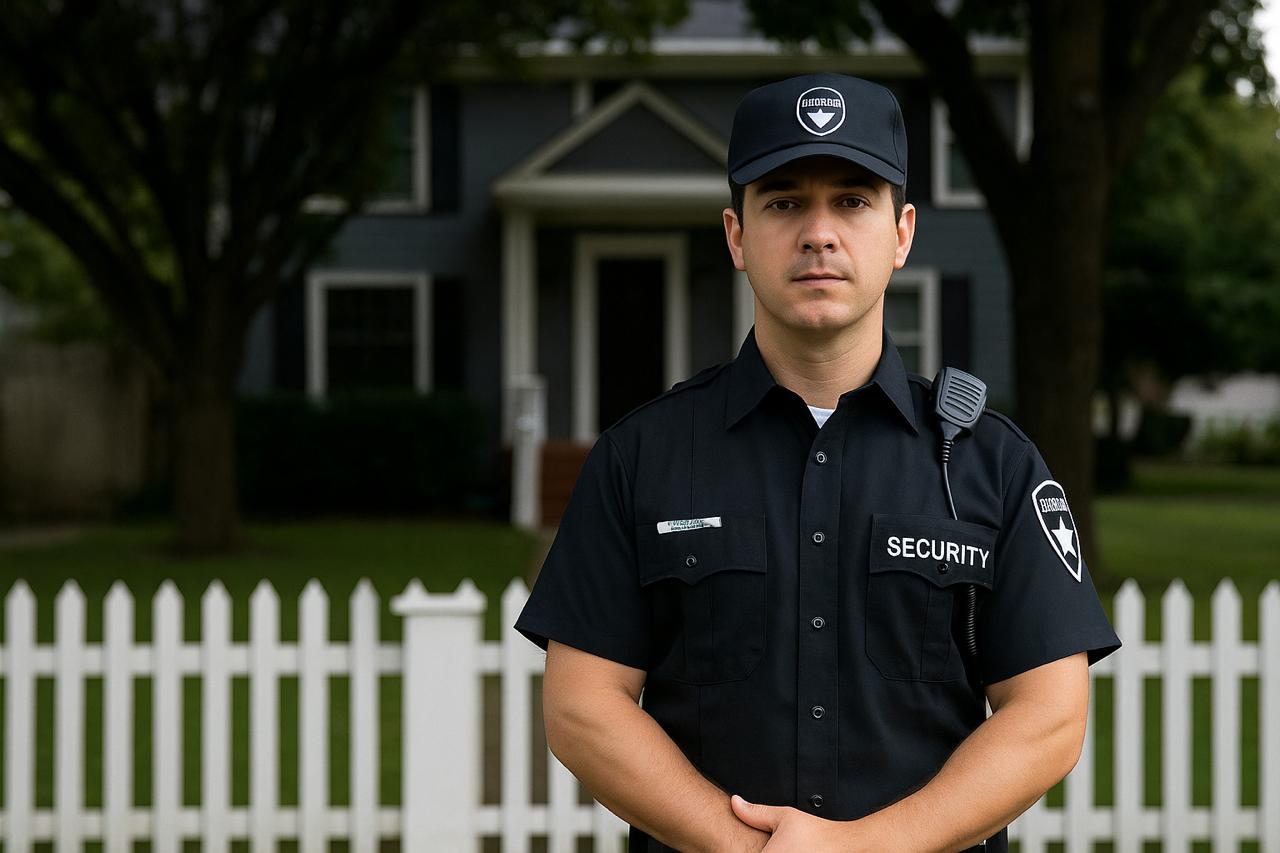
Professional residential security in California and Texas typically includes monitored alarm response, marked or unmarked patrol of the property and immediate neighborhood, residential standing posts, executive protection for the homeowner and family, and integrated technology systems including cameras, access control, and intrusion detection. The right combination depends on the specific risk profile of the property.
Common Mistakes to Avoid
A few patterns appear repeatedly in residential security failures:
- Relying on a single layer. A home with great locks but no cameras, or great cameras but a hollow-core front door, has a single point of failure. Real security is layered.
- Buying a system and never testing it. Alarms, sensors, and cameras need to be tested regularly. A monitored alarm system that has stopped communicating with the monitoring center is worse than no alarm at all, because the homeowner believes they are protected when they are not.
- Treating security as a one-time project. Threats and circumstances change. A security setup that worked five years ago may have visible weaknesses today: outdated firmware, dead camera batteries, lapsed monitoring contracts, lighting fixtures that have burned out.
- Underestimating the human layer. Most successful residential intrusions involve some failure of habit or routine, not a failure of equipment. The most expensive system in the world cannot compensate for a back door left unlocked.
Final Thoughts
Effective home security is layered, not absolute. A few hundred dollars of strike-plate hardware, motion lighting, sensible camera placement, and disciplined daily habits will do more for most homes than thousands of dollars of high-end equipment used carelessly. For homeowners with higher risk profiles or larger properties, a professional security assessment is the right starting point and the foundation of any serious protection plan.